
With the latest tmOS update we’ve aimed at making your daily operations smoother, faster and more transparent. Our latest tmOS release brings new intelligence to your workflows, improves fleet analytics, and introduces powerful upgrades across the full tmc ecosystem. Highlights include Quickcharts, expert modes, unified hierarchies, and dark theme support. So without further ado, here is what’s new:
Smarter System Protocols
We’ve taken a big step forward in how tmOS handles track-based protocol processing. It is tightly integrated with the report generation engine and with one click you trigger the creation of (customer-specific) reports on demand. Using the tmOs native tools or integrated 3rd party localization systems, protocols can now be fully synced, split per track, and reprocessed with different Master Data information.
This upgrade brings cleaner data structures, more accurate alignment, and simpler downstream analysis.
Navigating tmOS just got easier
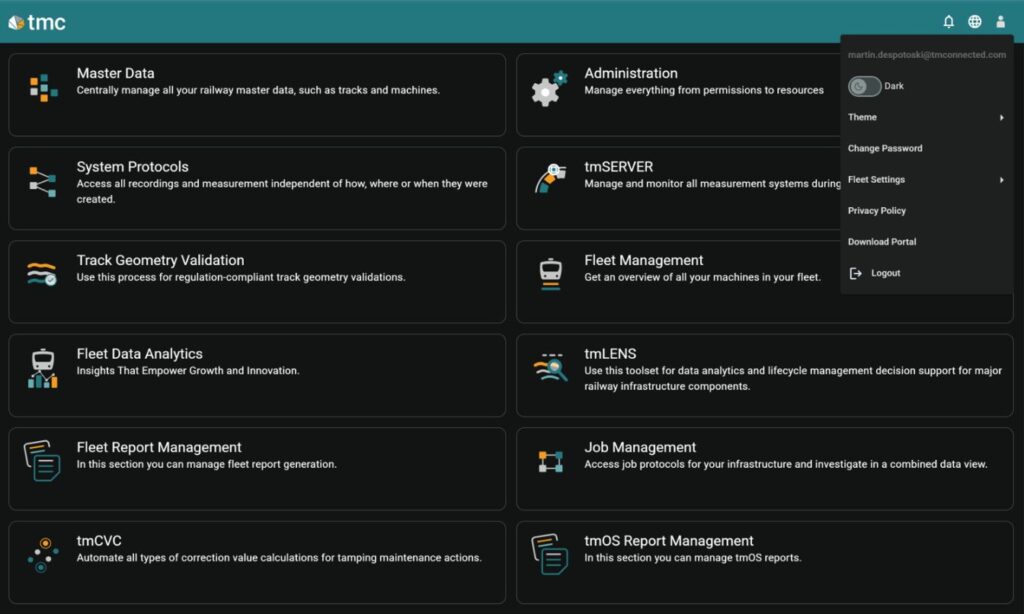
A few quality-of-life improvements go a long way: tmOS now remembers your previous view state, including sidebar, filters, sorts and pages. The filtering got more sophisticated on several occasions, particularely with System Protocols, which can also be filtered for Manufacturer or the type of system. Full dark theme support for reduced eye strain and better visibility in low-light environments like our machine onboard tmOS use-cases or simply, because you prefer it also that way in the back office.
Fleet management: faster analysis, clearer cockpits
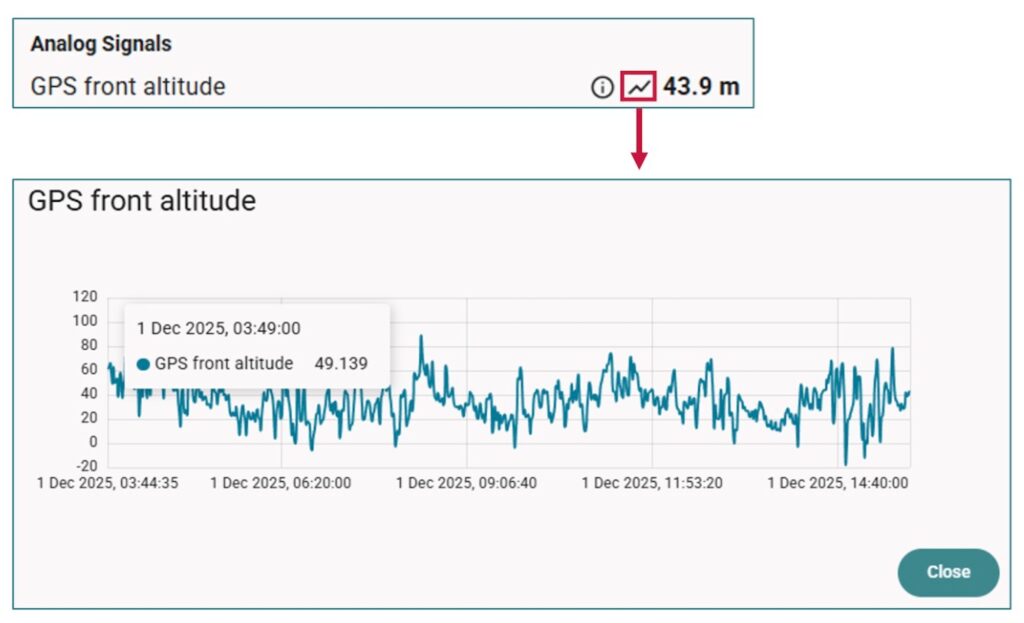
In the cockpit we’ve enabled Quickcharts for analog, digital and big numerical signals provide instant 24-hour signal history. Fleet Data Analytics also gets more flexibility: charts can now be reordered or hidden, and table visuals are unified across all views. Breadcrumb navigation is consistent between tmOS and Administration, making deep-dive workflows far easier to follow.
tmCVC give more control to experts
Tamping engineers can now work with a dedicated expert permission level. New features include the optional disabling of base lifting, more accurate lifting calculations that incorporate superelevation errors, highlights in red where minimum lifting is not met and configurable ramp start/end points to support multiple tamping runs. A sharper, more trustworthy lifting model means more confidence during machine operations and post-run analysis.
PosTG: more power in live mode
Commissioning teams can now rename PosTG signals directly. Pure PosTG measurements display absolute kilometer positions in live mode, and binary report generation is now automatic.
Feature Updates across the board
- tmDRP, tmAGC and tmSERVER can measure simultaneously, enabling richer multi-system insights and more advanced use-cases on fully digitized machines.
- tmENV now supports Platform Edge Detection, Track Distance Measurement and Clearance Profile processing.
- tmRTG shows color-coded differences in marker measurement for easier calibration verification.
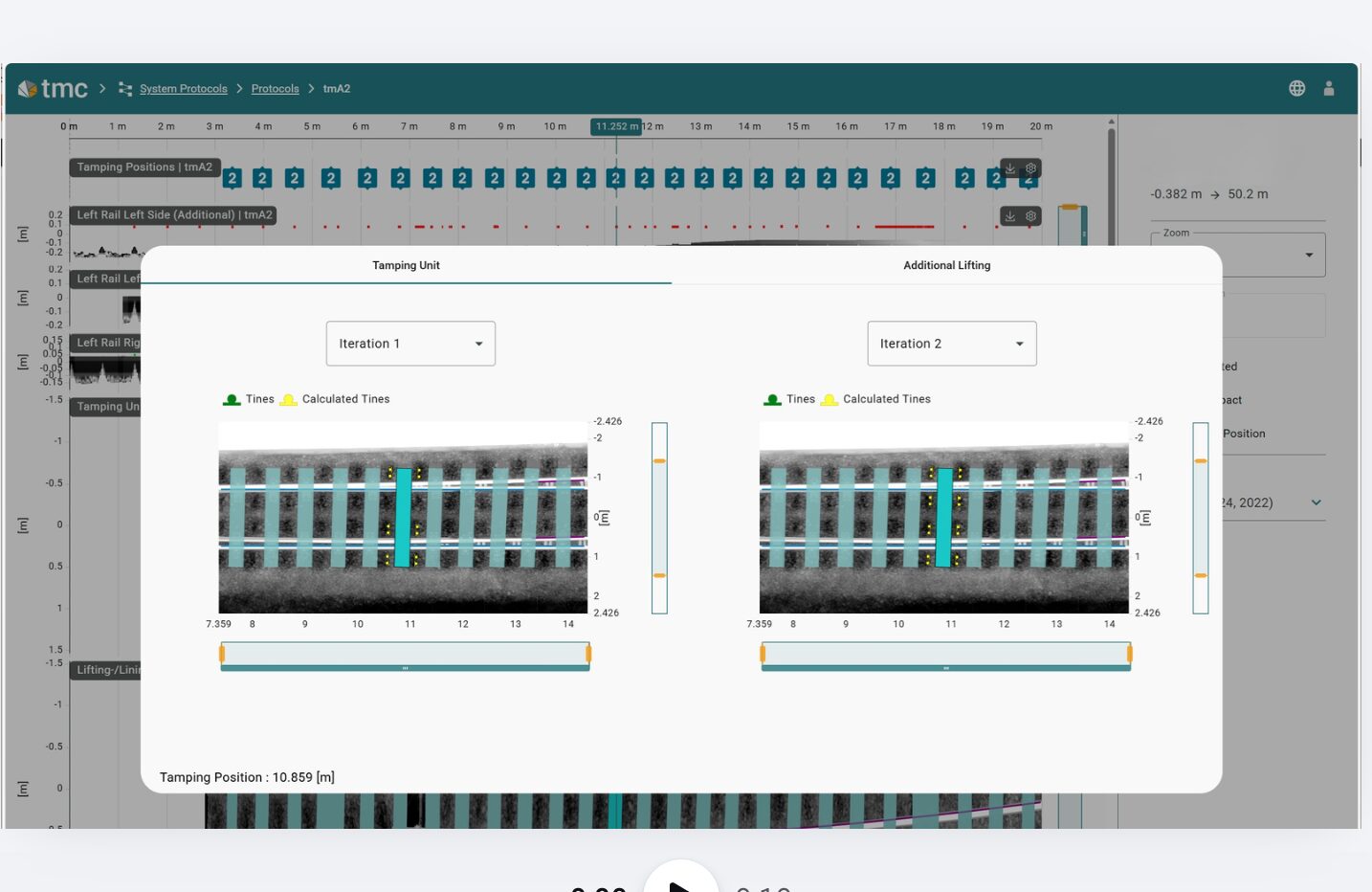
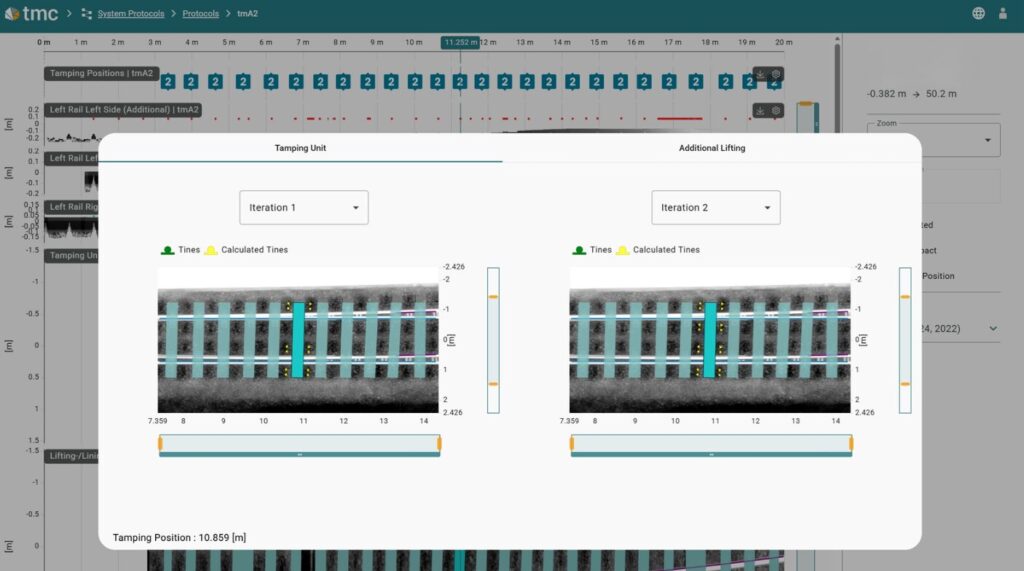
- tmA2 visualizes overlapping protocol data and automatically adds its System Protocols to Jobs.
- Plasser Tamping Control protocols are also added automatically to Jobs, ensuring complete documentation without extra clicks.
Master Data and User Management: stronger foundations
Last, but not least: We’ve consolidated multiple resource hierarchies into one unified structure and introduced the Meta Policy Component to group several policies under a single logical unit. Permission checks are now significantly faster, making complex user setups more responsive.
This release also offers significant improvements in UI, performance and backend management across all platform applications. Expect smoother geofence interactions, clearer configuration limits, accurate last data time displays, improved widget stability and consistent table rendering throughout the system.
It’s a joy to use, we invite you to ask for a demo, if you aren’t already a user. Contact us!